Thursday, February 11, 2016

Braddock's Defeat, 1980

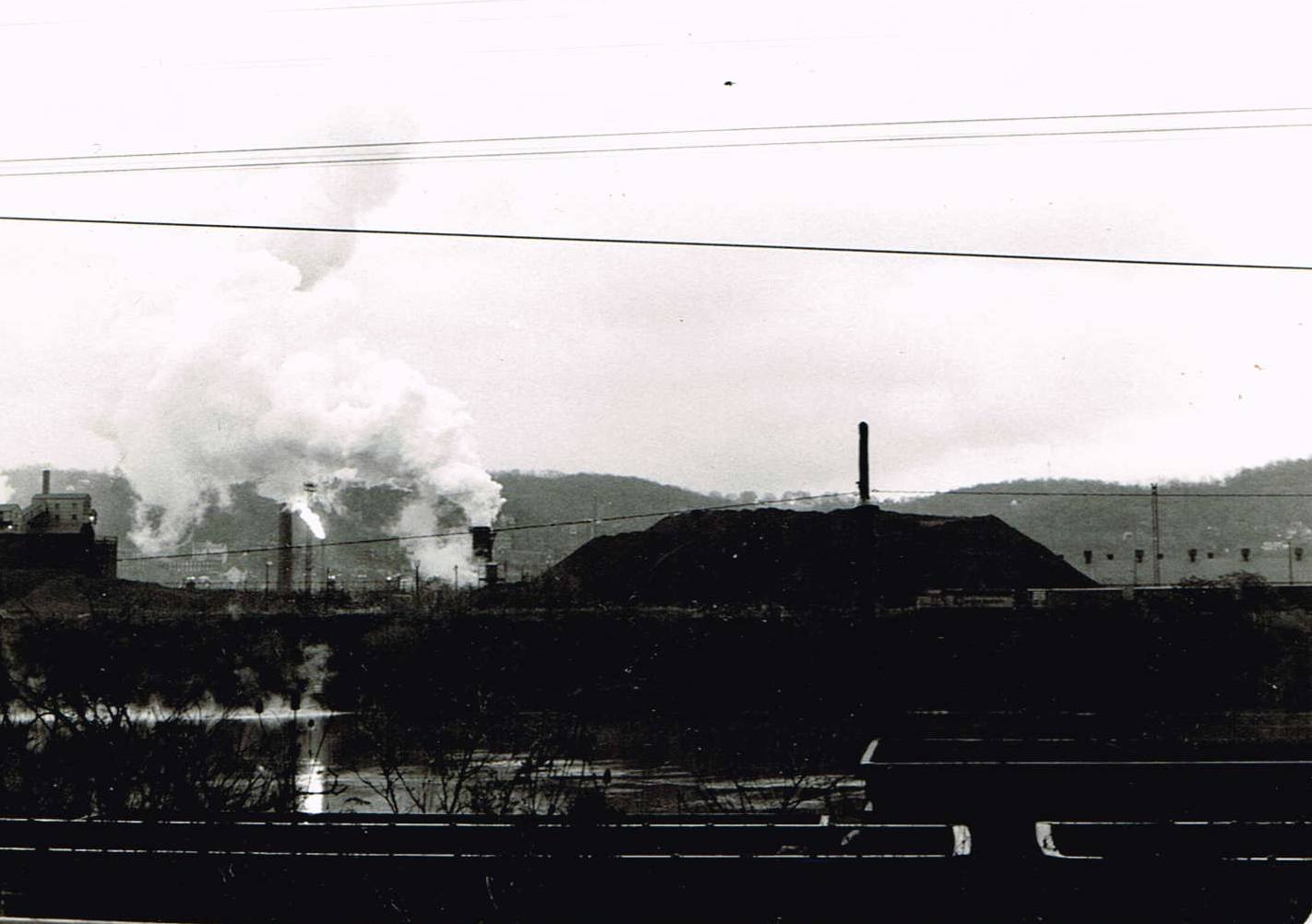
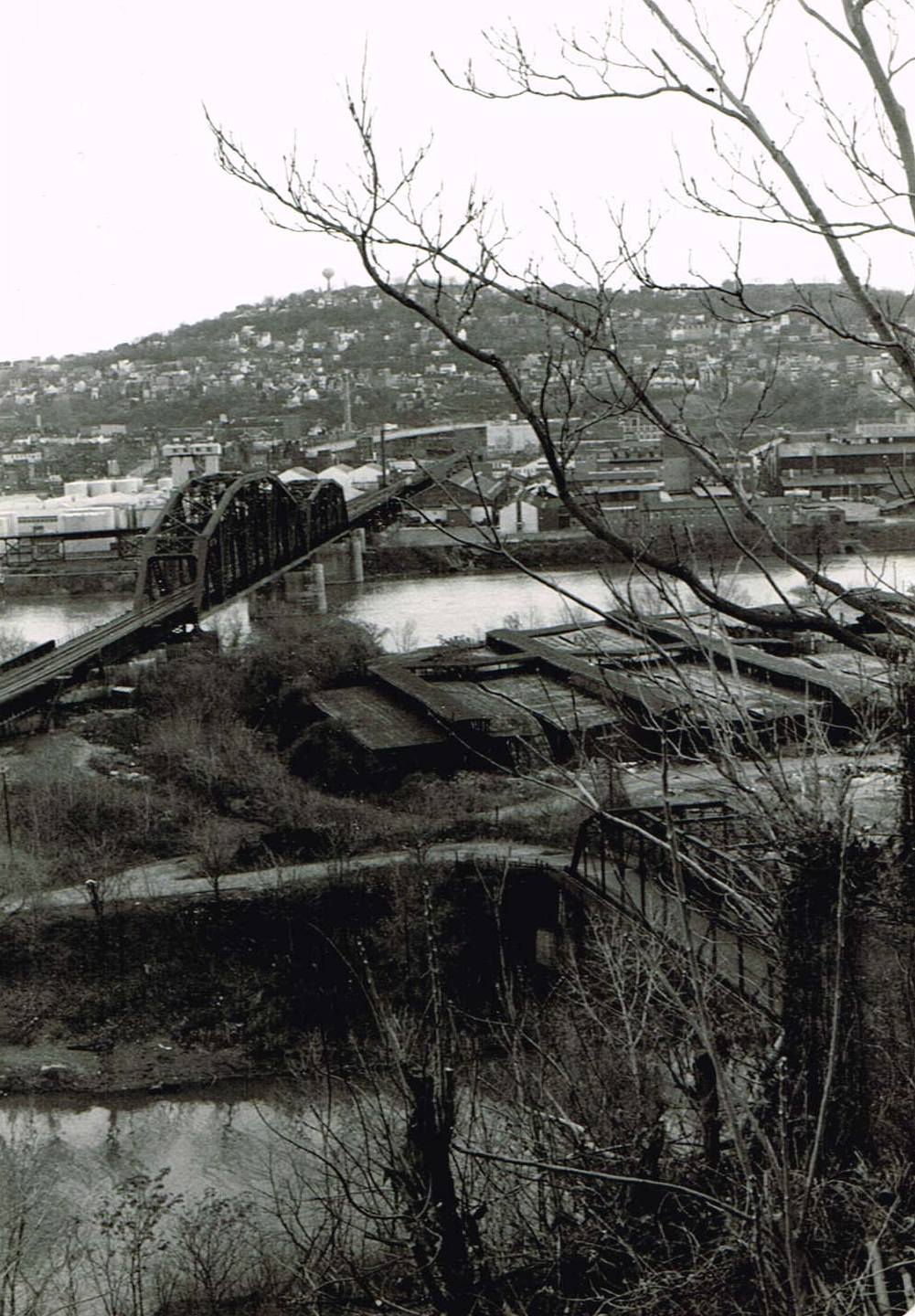
In 1980 when I was writing an opinion piece on preservation for the Minneapolis Star, I decided to take some photos of Braddock, the mill town across the Monongahela from Homestead. The idea was to have something for illustrator Craig Macintosh to use with the piece.

On a dreary winter day during a visit, I put black/white film in my Nikon and went over to Braddock. I started at the bottom of the hill and wound my way to the cemetery at the top. Here are the photos I took, roughly in chronological order. They show a town that has pretty much lost hope. In that year the U.S. Census counted 5,634 inhabitants, down 35.9% from 1970, the biggest population drop in a decade in Braddock history.

Note: For those unfamiliar with the history of the area, Braddock was named after British General Edward Braddock. On July 9, 1755, British and British colonial troops under Braddock's command were ambushed and defeated by French and Indian forces in an engagement  near the present town. Three days later, Braddock died of wounds suffered during the battle. His body was allegedly buried on the banks of the Monongahela, and wanting to keep his grave secret, the British rode their horses and wagons over the site. This failed military expedition that attempted to wrest Fort Duquesne (later Fort Pitt) at the confluence of the Monongahela and Allegheny Rivers from French control, is known as "Braddock's Defeat."

Double houses
"Economic Crisis. . .Great Depression. . .Proletariat"
Burned out house.
Burned workers' houses.

Shuttered stores on Braddock Avenue
Political graffiti
An inhabited block
Old U.S. Post Office
By the mill
 Edgar Thompson Works
By the railroad tracks
Library Street at Parker Avenue
The Carnegie Free Library, the FIRST Carnegie Library, built 1888, a National Historic Landmark, then shuttered.
The Frank Vittor statue, "Winged Victory", a WWI memorial. It was this photo that Macintosh chose for his illustration.
A cemetery monument
It would be interesting to walk around Braddock today and try to find the places shown in these photos. Perhaps on my next visit to Pittsburgh, I will do just that.


Today, after decades of decline, thanks to Mayor John Fetterman, Braddock is looking better. Since 2005, Fetterman and the citizens of Braddock have worked tirelessly to attract new residents, especially those from the arts community. The mayor also initiated various rehabilitation efforts that have aided in Braddock's renewal. Fetterman is currently a candidate for U.S. Senate in Pennsylvania. https://johnfetterman.com/

Braddock was in defeat, but now, three decades later, is finally getting on its feet and standing proud.

Sunday, December 20, 2015

Forever Green: Trees of the Winter Solstice


Snowy evergreen trees in Austria
Many people are familiar with the old German folk song that goes like this (literal translation at right):
 O Tannenbaum, o Tannenbaum,                               O fir tree, O fir tree,
wie treu sind deine Blätter!                                          how true (loyal) are your needles!
Du grünst nicht nur                                                    You're green not only
  zur Sommerzeit,                                                          in summertime,
Nein auch im Winter, wenn es schneit.                       But also in winter, when it snows.


The most important characteristic is that the tree is green year-round, even when it's snowing. The symbolic use of evergreen trees and plants around the winter solstice is a European tradition going back to antiquity. Ancient peoples associated evergreens with the promise of returning life. As the shortest day of the year in the northern hemisphere approached, people decorated their homes and temples with evergreens to celebrate the daylight lengthening again. In northern Europe, the Celts and Scandinavians marked the winter solstice by decorating with evergreens. On Jul, December 20th, the darkest time for all living things, ancient Norsemen celebrated the rebirth of sun god Baldr, slain with a sprig of mistletoe.
"The Death of Baldr" by W.G. Collingwood (1908) illustrates how Loki guided the hand of the blind Höðr in throwing the fatal branch of mistletoe.
Our modern Christmas tree--a tree decorated to celebrate Christmas--was documented first in 16th century Germany when Christians began cutting spruces, pines, and firs to bring into their homes. But in the English-speaking world many Christians associated the trees with pagan religions even into the mid-19th century. In 1659 the "no fun" New England Puritans banned not only Christmas trees, but any celebration of Christmas that was not a religious service. However, the practice of using an evergreen as a Christmas tree finally caught on in anglophone countries when Queen Victoria and her German husband were drawn standing around a decorated tree with their children in 1848. If the Queen could do it, so could her subjects.
The famous picture of the royal family gathered around their Christmas tree.
Three years later, an entrepreneur opened the first American Christmas tree market in New York City, selling trees he cut down in the Adirondack Mountains. Fifty years after that (1901), the first commercial Christmas tree farm was established in New Jersey with the planting of 25,000 Norway spruce. Since then, the growing and selling of holiday trees has become a billion-dollar industry.
A wagon loaded with trees in Hartford, Connecticut, c.1890 (Connecticut Historical Society)

By the 1890s, the decorating of Christmas trees had become a well established tradition in America. Two scenes in Darkness Visible are devoted to describing the Bernhardt and Jones families' setting up and decorating their Christmas trees. In East Liberty, Karl Bernhardt drills holes in a broomstick and places sticks in them to create a rustic artificial tree; his wife and daughter decorate it with cookies and candy. Emlyn buys a fir from a German farmer and winds up helping arrange some around the altar in St.John's Lutheran Church. Later, he watches Eirwen hang home-made decorations on it.

Both of these scenes in Darkness Visible are taken from personal experience and family folklore; both are stories from the German tradition of the winter evergreen tree. One of my father's favorite Christmas stories was how his German immigrant grandparents were so poor that on Christmas Eve his grandfather would make a tree out of a broomstick, on which they hung edibles.  The other half of the story is the part where their seven sons would come downstairs before dawn's early light and strip the tree bare in minutes. The wooden structure Emlyn visited was long gone by the time my family went to St. John's Lutheran, but in the brick 20th century church on 10th and Ann, the congregation would set up a creche to the left of the altar and place undecorated evergreen trees around it.
The Metropolitan Museum in New York City annually displays a Baroque creche with an exquisitely adorned tree.
Until the late 19th century, there were no electric tree lights, so people used candles--a practice, according to folklore, initiated by Martin Luther.  My Grandfather Busch was so terrified of fire after his sister died when her skirts caught fire from a fireplace that he would allow the candles to burn on the tree only a few minutes before extinguishing them. While they burned, he stood anxiously by with buckets of water and sand, just in case. My father and his sisters had to be satisfied with the brief display--although it was made more special by its brevity.

The first electrically lighted White House Christmas tree, standing in the Oval Office, 1895.
My family has always been partial to the short-needled evergreens, the spruces and firs, because, as my mother said, they "smell like Christmas." Selecting and decorating a tree has always been an important part of holiday preparations. One year I remember freezing for over an hour in the Second Ward schoolyard on Eighth Avenue while my mother and I looked through just about every tree in the lot in our quest for the "perfect" one. I'm sure we found it. We always did.
Christmas morning, showing off the doll I got from Santa, with the tree and train.
Several years ago, during an especially snowy December in Minneapolis, I decided to indulge my fantasy of bringing home a tree on a sled. I hauled out my Flexible Flyer, polished the runners, hitched up my two border collies and headed for the neighborhood hardware store three blocks away.

I picked out the usual perfect tree, tied it to the sled, and started home. All went well for the first half block, but then the 8-foot tree started to slide off the 5-foot sled. The dogs, nervous about the big scary weird thing on the sled, pulled hither and yon, making things worse. Three times during the trip home, the tree fell off the sled. Getting up and down curbs at street corners was tricky. By the time I got the tree home, I was exhausted and the tree and dogs were covered with slush. The next day, after we all thawed out, I decorated the tree and determined that it would be the first and only one I'd venture to haul home on a sled.
If you want to haul a tree on a sled, use huskies, not border collies.
This year I downsized my tree to about half the size of ones in recent years. I got another Fraser fir--bought it trussed up at the local hardware store lot--and when I untied it and set it up, voila! it was (once again) perfect. I decided that I'd decorate it only with old ornaments from my childhood in Pittsburgh. In the 1950s, my cocker spaniel Buffy knocked the tree over twice chasing the toy train underneath. We lost most of my father's childhood ornaments in these mishaps. Over the years, they all were broken except one, a Liberty Bell c. 1910.  I still have the Bell, which enjoys pride of place on my tree every year. This year it hangs on the tree with a few dozen glass balls with stripes, stars, and silhouettes of wise men on camels from the 'Fifties. As in the 'Fifties, the lights are electric, not wax candles.
The old Liberty Bell ornament (center) with a drum I made out of milk caps in first grade.
The winter solstice holidays, whether they be Christian, Jewish, pagan, or of recent invention, are associated with many traditional practices. One of the loveliest, one that resonates with the symbolism of the solstice, is the decorating of evergreen trees. In many homes, the Christmas tree is the decorative focal point of the holiday. Whether it's a huge Norway spruce or a tiny Norfolk pine or one made of plastic or aluminum, the Christmas tree embodies the meaning of the season--rebirth, light and life overpowering darkness and death.
1960's Modern Christmas tree by Lawrence "Bud" Stoecker
Postmodern "ABIES Electronicus" on Grand Square, Brussels, Belgium
This year's perfect Fraser fir, adorned with 'Fifties glass ornaments and handmade ones.

 Happy Solstice    
                          Jolly Yule                                    
                                            Merry Christmas

Saturday, October 31, 2015

Twice-Told Tales II: Steel Town Ghosts

In last year's Halloween post I re-told my father's story about spooky goings-on in the Woodlawn School auditorium. This year I have several more tales of ghosts and apparitions from Pittsburgh.
Spooky stairwell in the east wing of the Homestead Library.--Photo by Ceridwen Christensen

The haunted theater is a common tale. In addition to the Woodlawn auditorium, the Music Hall of the Carnegie Library of Homestead--not to mention the library itself--is alleged to be haunted. However, these stories have been told so often by so many people that it's impossible to know the origins. Some people believe that these are the ghosts of steelworkers taking revenge on Carnegie for the '92 Strike. I don't buy it. By the time the library was built, the unionists had scattered and the mill was filled with replacement workers. I have never heard a first- or second-person account about Homestead Library ghosts, nor experienced anything there myself. If you want to hear the traditional ghostlore of the place, I'd suggest going on one of the ghost tours that are offered as fundraisers for this historic building.
The Pittsburgh Playhouse, built 1933,

Another theater haunting story is another one of my father's. Dad was active in Pittsburgh theater beginning with his college days at the University of Pittsburgh. At the Pittsburgh Playhouse in the 1930s, Dad worked with an actor named John Johns. One evening in 1963 Johns suffered an apparent heart attack after dinner in the Playhouse restaurant.  My father's version was that Johns walked to his dressing room, #7, but died on its threshold; another version is that Johns' colleagues carried him to #7, but he died before they could get him inside. Either way, since then, many witnesses have heard Johns' footsteps coming up to the door of #7--and ceasing.
The crumbling portico of the stone house that once was home to the Eagles lodge in McKeesport.--Photo by Jonathon Denson
 Real estate agents are often good sources of uncanny tales. I've heard two stories from realtors about houses in McKeesport. Having fallen on hard times, McKeesport can be a spooky place, especially at night, so it's easy to imagine ghosts roaming the halls of the old, abandoned buildings there. But both of these tales date back from my early years of ghost story collecting, so who knows if these houses are even standing.
A rickety vacant frame house in McKeesport.--Photo by Jonathon Denson
 Story #1 involves a rarity among my story collection: physical contact. An agent was showing prospective buyers a turn-of-the-century house. As she entered the house, the agent immediately felt a hostile presence. As she took the couple through the downstairs rooms, the agent felt shadowed by a malevolent energy.  This feeling stayed with her on their tour of the upper floors. As the agent stood at the top of the staircase in preparation for leaving the house, she felt unseen hands forcefully push her from behind. The couple behind her were astonished to see the realtor suddenly plunge forward. Caught unaware, the agent desperately grasped at the banister, managing to stop her fall a few steps down. Badly shaken, the agent and buyers beat a hasty retreat. Needless to say, the couple did not make an offer on the property.
A once-grand McKeesport Victorian, now abandoned.--Photo by Jonathon Denson

Story #2 also involves physical movement. A large Victorian house that had stood vacant for many months went on the market. The only furnishing remaining in the house was a grand piano in the parlor. The first time the listing agent brought clients to the house, he could not get the front door open. The huge oak door would unlock, but would not budge from its closed position. The agent went around back and came in through the kitchen. When he went into the front rooms, he couldn't believe his eyes: the grand piano was firmly lodged against the front door. He assumed that mischievous kids had shoved the piano to bar entrance, but there was no evidence of a break-in. A week later, the same thing happened to another agent. She had tried to bring clients through the front, only to find the piano blocking the way. Once again, the listing agent enlisted friends to help him move the heavy piano back to the parlor. However, when the piano was moved in front of the door on three more occasions during the ensuing weeks, the agent came to believe that something supernatural was at work. Was the house haunted, or was the piano? In any case, the agent urged the sellers to remove the piano, which they did. The piano stayed put in its new home, and the house eventually sold. The agent hadn't heard stories from the new owners--and frankly, did not want to know if large objects were moving about inside the house.
A typical Munhall brick foursquare house.

The last story is about a modest foursquare house in Munhall.  In the 1980s, a family of four moved into the house. The nine-year-old son, "Tom", got one of the back bedrooms, while his older sister got the other. They had not been in the house long when the son (who told me this story) began waking in the middle of the night, feeling like someone was in the room watching him.  After this had happened frequently over a period of several months, the boy asked his parents if he could change rooms. When he told them why, his father scoffed at him, telling him that he had an overactive imagination. However, his sister believed him, and sometimes he would pick up his pillow and blanket and go into her room to sleep on the floor. Then, one day, Tom saw the ghost. He awoke at dawn, disturbed by something. There, in the half-dark, standing by the door was the misty form of a middle-aged man in work overalls, glaring at him. The boy stared at the apparition, terrified, for a moment. And then it vanished. When he told his parents about the apparition, his father again chided him, saying that ghosts don't exist. But fortunately, his father didn't prohibit Tom from sleeping in the sister's room whenever he felt the presence in his own. The family lived in that house for two years, and every day of their stay there the boy was anxious about spending time in his room. Now an adult, Tom thinks that the ghost was that of a former owner, a deceased steelworker, whose room became his--sort of. At any rate, Tom was happy to see the last of that place.

A street of abandoned houses in McKeesport. If they aren't haunted, they should be.--Photo by Jonathon Denson
From ghoulies and ghosties and long-leggity beasties, and things that go bump in the night, Good Lord deliver us. . .and Happy Hallowe'en to all!

Thursday, October 8, 2015

Remaking Industrial America: Homestead and Lowell, Massachusetts

I recently visited Lowell, Massachusetts, an old textile mill town, known as the "cradle of the Industrial Revolution" in the U.S. It's much older and bigger than Homestead, but shares a history of heyday, decline, fall, and rebirth.

A block on Merrimack Street in Lowell's business district

Settled in 1653, Lowell is located on the Merrimack River, 25 northwest of Boston. In 1826 a consortium of industrialists known as the Boston Associates started developing a planned industrial complex along the river. Its cotton mills were initially powered by water turbines driven by a series of canals, built largely by Irish workers who had fled the Potato Famine.  By 1850, the canal system produced 10,000 horsepower for the city's 40 textile mills, and Lowell's population had swelled to 33,000, making it America's largest industrial city.
Lowell's mills in 1910. The pollution, while not as bad as in Pittsburgh's steel towns, is still horrible.

Old Belgian block paving, as in Homestead.

The textile workers, called Mill Girls, were primarily young, single women from New England farms. Like steel workers, Mill Girls worked ridiculously long hours operating machinery in unhealthy conditions. The air inside the mills was filled with minuscule lung-clogging textile particles. The fast-moving looms and spindles made for an ever-present danger to life and limb. In the 1830s, a half-century before the mass movements for workers' rights, the Lowell  Mill Girls organized, went on strike, and mobilized in politics when women couldn't even vote—and created the first union of working women in America. This was a remarkable feat, as remarkable as the steelworkers' battle for better working conditions and pay in 1892 Homestead.
The dining room in a former women's boarding house, now a museum.
The housemother's room in the boarding house. Could that be a Welsh tapestry coverlet, or an American copy of one?

As in Homestead, in the late 1800s and early 1900s, Lowell saw a large influx of new immigrants from Germany, Greece, Poland, Sweden, Lithuania, Portugal, including Jews from Eastern Europe. By the beginning of World War I, Lowell had reached its economic and population peak with over 110,000 residents. But while Homestead's steel mills grew larger as the 20th century progressed, Lowell's textile mills fell into decline in the 1920s, when owners began relocating their mills to the South.
The sign on Lowell's Lithuanian Club. My Grandfather Katilius once frequented the now long-gone Lithuanian social club in Homestead.
In the 1970s, Lowell bottomed out. The population declined, stores closed because of competition from suburban malls, and unemployment skyrocketed--as happened in Homestead a decade later. In Lowell many historic buildings were wrecked and whole neighborhoods bulldozed in a desperate attempt to revitalize the city through new development. Like Homestead, the city of Lowell struggled with a plummeting tax base, empty storefronts, crime, and devastating fires.
A three-alarm fire in an old building in Lowell on July 9, 2014, killed seven and left dozens homeless. (Photo courtesy Boston Globe)
 While Homestead contains the Rivers of Steel National Heritage Site, in the 1970s, the Lowell Heritage State Park and Lowell National Historic Park were established to preserve the core industrial area of the city. Unlike the steel mills of Homestead, the textile mill buildings could be adaptively reused. Abandoned mill structures started to be converted into housing and office space, and some became museum buildings.
A former textile mill, now part of Lowell National Historic Park.
The interior of the mill today.

While the entire Homestead Works has disappeared, replaced with the Waterfront retail, restaurant, hotel, and apartment complex, the urban core of Lowell remains. Lowell, with a current population of over 100,000, is a city in its own right, an urban center boasting a university and a community college, and another influx of new immigrant residents. The population of Homestead, a satellite of Pittsburgh,* peaked during World War II at 19,000; its current population is just over 3,000.
The restored facade of the Bon Marché department store building (1887). After becoming vacant in the 1990s, the building has been successfully converted to mixed-use by the City of Lowell.
Like so many towns in the Rust Belt, both Homestead and Lowell are working to reinvent themselves, while continuing to embrace their industrial pasts.  As a preservationist, I am gratified that government has recognized the importance of their heritage and is giving them the resources to document and preserve it.  It's wonderful to walk down the streets and see new stores, shops, and restaurants in the old buildings; it's wonderful to see a new population of immigrants making these towns their home.
Arthur's Paradise Diner, a converted streetcar, is famous for its gigantic "Boot Mill" sandwiches.
Mofongo con chicharron at the Time Out Cafe, run by a Dominican family.

However, I am very concerned that with the renewal of these old towns and neighborhoods, so much of the redevelopment is aimed at the young, single, and affluent. In pricey Massachusetts, rents and mortgage payments on rehabbed historic properties are well above being affordable for families and the working poor. Worse yet, when parts of old neighborhoods are wrecked for new luxury apartments and condos (as is happening in mine), there is a triple hit: to the environment, to community identity, and to lower income residents who are forced out.
Renting a small two-room apartment in the converted Boott Mill complex will set you back $1,800-2,500 monthly.

Nevertheless, I am pleased and hopeful seeing the signs of renewal in these old industrial towns. Across the Monongahela River from Homestead, Mayor John Fetterman is working miracles in revitalizing Braddock (population 2,900). Attracted to the town's "malignant beauty" as an AmeriCorps worker, Fetterman stayed on. In ten years, Fetterman and the people of Braddock have turned the town around, working tirelessly to boost the economy, provide decent housing, and fight crime.
A former Lowell industrial baron's home. This Victorian Shingle Style house stands out among the many large Colonial Revival homes in the city.
Frank Lloyd Wright once said that "A building is not just a place to be but a way to be." The same can be said of communities. Homestead and Lowell, too, are coming back, reborn as historic places remaking themselves in new images.
Looms in the museum.
                    +                    +                    +                     +                     +                     +
*It amuses me when I see Homestead described as a "suburb."  A suburb it ain't; it's an old mill town seven miles from downtown Pittsburgh.
Row houses in the Lowell Historical Park
      --