Showing posts with label 6 July 1892. Show all posts

Thursday, August 17, 2017

Presentation on Workers in the 1892 Homestead Strike, August 26th, 2-5 pm

The Advisory Board for the 1892 Homestead Strike

As part of the commemoration of the 125th anniversary of the 1892 Battle and Strike, the Battle of Homestead foundation is hosting a presentation: "Our Families in the Battle of Homestead: Weaving Folklore into the Warp of Historical Fiction." Trilby Busch's historical novel, Darkness Visible: A Novel of the 1892 Homestead Strike, recreates the experiences of the workers and townspeople who witnessed the strike and battle firsthand. The author’s great-grandfather was killed in the Homestead Works in the immediate aftermath of the strike. A Steel Valley native, Trilby Busch will show how the novel weaves oral history and research into a insider’s view of the dramatic events unfolding in 1892. Carson Sestile will sing "Father Was Killed by the Pinkerton Men" composed by William Delaney in late 1892. Seven descendants of members of the strike committee and of strikers will also share their family stories. A reception afterwards will allow everyone to mingle and meet the presenters.

                Saturday, August 26th. 2-5 p.m. 
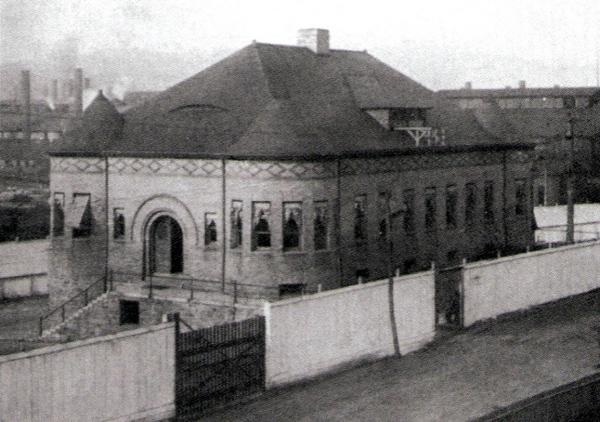
                            The Pump House, Rivers of Steel National Heritage Area
                                     880 E. Waterfront Drive, Munhall, PA

                                                  Free and open to the public.


Thursday, July 6, 2017

July 6, 1892 Excerpt "The Battle Begins"

125 years ago. In the middle of the night, the pickets downriver have alerted the workers in Homestead that two covered barges are coming up the river from Pittsburgh, and that could mean only one thing--the company was bringing in scabs or guards, or both. Townspeople rush down to the riverbank, carrying whatever they had that could be used as a weapon. A little after 4 a.m. the barges arrive in Homestead and make for the landing inside the works, now enclosed by a high fence. The workers break through the fence and run to the landing.

 
JULY 6, 1892  4:15 a.m. At the river landing below the Pump House for the mill.
EXCERPT from Darkness Visible. Note: The actions and words of O'Donnell and the other historical figures are taken directly from eyewitness reports.

     The crack of rifle shots came at random intervals. People on the bank cursed and hurled threats at the men arriving on the barges. More shots were fired.

     In the half-light Emlyn made out the shapes of two enormous covered barges being towed into position at the landing by a tugboat. Union leader Hugh O'Donnell was moving along the landing, speaking to the crowd, urging restraint. His words, however, seemed to have little effect on the incensed mob. More people, many carrying guns, were spreading out along the bank and taking up positions on the Pemikey railroad bridge overlooking the landing. It was apparent the situation was far beyond anyone's control.

     "Duw, there must be thousands of people on the bank," said Gwyn. "Whoever they are, how could they dare come ashore?"

     "We'll soon see," said Smith.

     The first light of dawn was glinting on the eastern horizon as the tug with Little Bill painted on its bow grounded the barge Iron Mountain on the bank. The men who had led the charge into the mill rushed up. As a man in a slouch hat came onto the deck, someone threw a stone at the barge. From the landing people were yelling, warning those on the barges not to land. As the minutes tickets away, the threats escalated.

     Tensions were reaching a fever pitch as Hugh O'Donnell made his way to the front of the crowd. He was shouting something...but Emlyn couldn't hear what he was saying. To Emlyn's surprise, the crowd quieted.

     O'Donnell came to the water and called out to the men on the barges. "On behalf of five thousand men, I beg you to leave here at once. I don't know who you are or where you came from, but I do know that you have no business here." He went on, entreating them not to risk violence by trying to come ashore. "Don't attempt to enter these works by force."

     At that, a man in a blue military coat with brass buttons stepped on the deck of the Iron Mountain. "We were sent to take possession of this property and guard it for this company," he said.

     "Damned if it ain't Pinkertons," said Duncan. "Look at them blue uniforms."

     "Ssh!" said Smith.

     "If you don't withdraw," continued the man on the barge, "we will mow every one of you down and enter in spite of you."

     "They will, will they? I don't think so," growled Duncan.

     "Hush, dammit," said Smith.

     O'Donnell was talking. "What you do here is at the risk of many lives. Before you enter those mills, you will trample over the dead bodies of three thousand honest workmen."

     For a moment, the crowd on the bank watched in silence.

     A group of men on the Iron Mountain brought out a gangplank and pushed it into the landing. The man who had spoken came to the top of the plank. Simultaneously, the leader of the militant strikers took a stand at the other end of the plank, the others behind him.

     "Who's the striker at the bottom of the plank?" whispered Gwyn.

     "It looks like Billy Foy, the feller from the Salvation Army," said Smith." And behind him, Martin Murray, the heater--he's Welsh," he added as an aside to Emlyn. "And next to him is Sotak, leader of them Slovaks."

        Emlyn watched in disbelief at the scene unfolding below. Men on the bank shouted warnings to the men in the barges. The Pinkertons hesitated. The officer at the front shouted out, "There are three hundred men behind me, and you can't stop us." Foy yelled something in reply.

     Emlyn strained forward to see what was going on, but fog blurred the details. It looked like the officer came forward and tried to hit Foy with something.

     In rapid succession, two gunshots rang out. The officer and Foy went down. Hugh O'Donnell threw up his hands and shouted something at the strikers.

     From the barge, someone shouted, "Fire!" and a volley of gunfire roared from the portholes. As if in slow motion, Emlyn saw several men on the riverbank crumple to the ground.

     Women started screaming. The people around Emlyn began jostling each other, shifting away from the exposed position on the bank. From the riverbank came more shots.

     "Take cover," Duncan yelled. Return fire from the strikers thudded into the sides of the barges as the Pinkertons continued firing.

     His heart in his throat, Emlyn sprinted toward the mill building behind them. He caught sight of a dinky engine and ran behind it. Gwyn, running behind him, tripped and went sprawling onto the tracks thirty feet away. His rifle flew out of his hands and clattered onto the tracks.

     Emlyn stood at the front of the engine, trying to decided if he should run out to help Gwyn. A bullet pinged sharply against metal, and a chip flew out of a pile of bricks beside the locomotive.

     "Ricochets!" yelled Gwyn, lowering his head. "Stay where you are."

     The firing continued unabated, punctuated by screams and shouts.

     "Are you hurt?" yelled Emlyn over the racket.

     "I don't think so. I'm going to make a run for it."

     "Stay there!" Emlyn shouted. "It's not safe."

     Another bullet slammed into the locomotive steam chamber with a reverberating thonk. Gwyn raised his head and glanced at Emlyn, measuring the distance. Swiftly, Gwyn pushed himself into a crouching position and dashed toward Emlyn. Ten feet short of his goal, Gwyn tucked his head down and rolled the rest of the way, coming to a rest against the wheels of the engine.

   "Bloody hell!" said Gwyn, taking in great gulps of air. "I thought I was going to get hit for sure."


Thursday, July 5, 2012

After the Battle Ended

     One hundred twenty years ago, around 3 o'clock on the morning of July 6th, striking workers at the Homestead Works of Carnegie Steel, on the watch downriver from the mill, spied two large barges being hauled upstream by a single tug boat.  They spread the word by telegraph, steam whistle, and horse messenger.  By the time the barges reached the landing site at the Works two hours later, thousands of townspeople stood on the steep banks of the Monongahela River, determined to stop whomever--scabs or guards--from entering the mill.
     The workers did stop the Pinkerton guards on board from disembarking--the only time in American labor history that the workers held off militia during a confrontation.  But it took a ten-hour running gun battle to do so, ending with the deaths of nine strikers and seven Pinkerton guards (The exact number is disputed, but the total surely exceeded these numbers on both sides).
The battle as illustrated in the  National Police Gazette, July 23, 1892
     Most accounts of the 1892 Homestead Strike cover the events of 1892-93, but do not go into what happened to the town in the long run--except to say that the company successfully stopped union organizing in the steel industry for nearly 40 years. (A notable exception is William Serrin's 1993 work, Homestead: The Glory and Tragedy of an American Steel Town, which traces the history of the town up to the closing of the Works).  When Hamlin Garland visited Homestead in 1893, he found the town "squalid and unlovely," a casualty of the failure of the strike and the so-called Panic which had plunged the US into a severe depression.
     Nevertheless, some former strikers who were blacklisted from steelmaking  managed to find work and remain in town.  The descendants of two of these strikers are the Debolt family, which still operates a bus company out of Homestead, and my cousin Grace Jack Krepps.  In fact, Grace and her brother Ronnie are some of the few people who can say they had grandfathers on both sides of the Strike--Jack (striker) and Busch (replacement worker).
       Grace told me that after her Grandfather Jack lost his job in the Works, he found another at the Homestead water works.  He didn't want to have anything to do with steel making, but he did not stop his son David, Grace's father, from taking work in the mill.  Dave Jack became a roller, a skilled worker who shaped hot steel into finished products.
A rolling mill crew from the Homestead Works, 1906 (photo from Gaughan collection, U of Pittsburgh)
    During my first visit to New York City in 1955, my parents took me on a visit to the Empire State Building.  "Your Uncle Dave rolled the beams used to the build this," Dad said, pointing upward.  At that time, the Empire State Building was the tallest building in the world, an engineering marvel that is still admired today.  I accepted Dad's word on faith, but found corroboration of this claim via a TV documentary about the construction of the building (1930-31).  The beams were on rush order from the Homestead Works, rolled in the structural mill and placed on fast freight trains headed for New York.  The delivery was so speedy that often the beams were still warm from rolling when they arrived at the building site.
The famous photo of a high-steel crew resting on one of the beams used to construct the Empire State Building. This is not Photoshopped.  The workers are hundreds of feet up, with no safety net or ropes. The death toll during the construction phase was one fatality per floor, with a total of over 100.
     Despite these success stories, however, the large majority of 1892 strikers were not re-hired and forced to look for work elsewhere, in another industry.  For example, John McLuckie, the former Homestead burgess and strike leader, wandered out West, eventually finding work as a foreman for the Sonoma Railroad in Mexico.  Who knows what happened to hundreds of other outcasts from the mill who left town, never to return?
       The descendents of those who replaced the strikers--myself included--understandably did not dwell on this aspect.  Everyone, unionist or scab, got the message of the strike's outcome:  Don't mess with H.C Frick and Carnegie Steel, for you will lose.  In those days, as now, property rights were held sacred in the United States.  Those who own the property can rely on the government at all levels-- local, state, and federal-- to send in troops to "restore order" in labor disputes, as they have countless times before and after the 1892 strike.
Federal troops fighting striking workers during the violent Railroad Strike of 1877.  Over a hundred people died, but the outcome was the same as with all 19th century strikes:  a victory for the company.
      The English critic and reformer John Ruskin, writing 42 years before the strike, observed: “In order that people may be happy in their work, these three things are needed: they must be fit for it; they must not do too much of it; and they must have a sense of success in it.” (Pre-Raphaelitism, 1850)  By this yardstick, very few, if any, workers in the Homestead Works before or after the strike could have been happy.
     When those thousands of strikers and townspeople rushed down to the river to stop the Pinkertons in the early morning hours of July 6, 1892, they thought they were waging a just war against the company.  Whether or not their cause was seen as just depended on the point of view of the observer.
     Yet the fact remains that in entering into battle with the company-hired Pinkertons, the workers of Homestead did an amazing, unique feat: the defeat of a trained, armed militia by a motley assemblage of workers.  For that, the name Homestead will always have a special place in American history.
The fortified Homestead Works aka "Fort Frick."  In the weeks before the battle the company erected a fence around the entire mill site.  During the battle, the workers broke through the fence, but mended it the next day, naively assuming that they would soon be returning to work.